The Reading Shelf
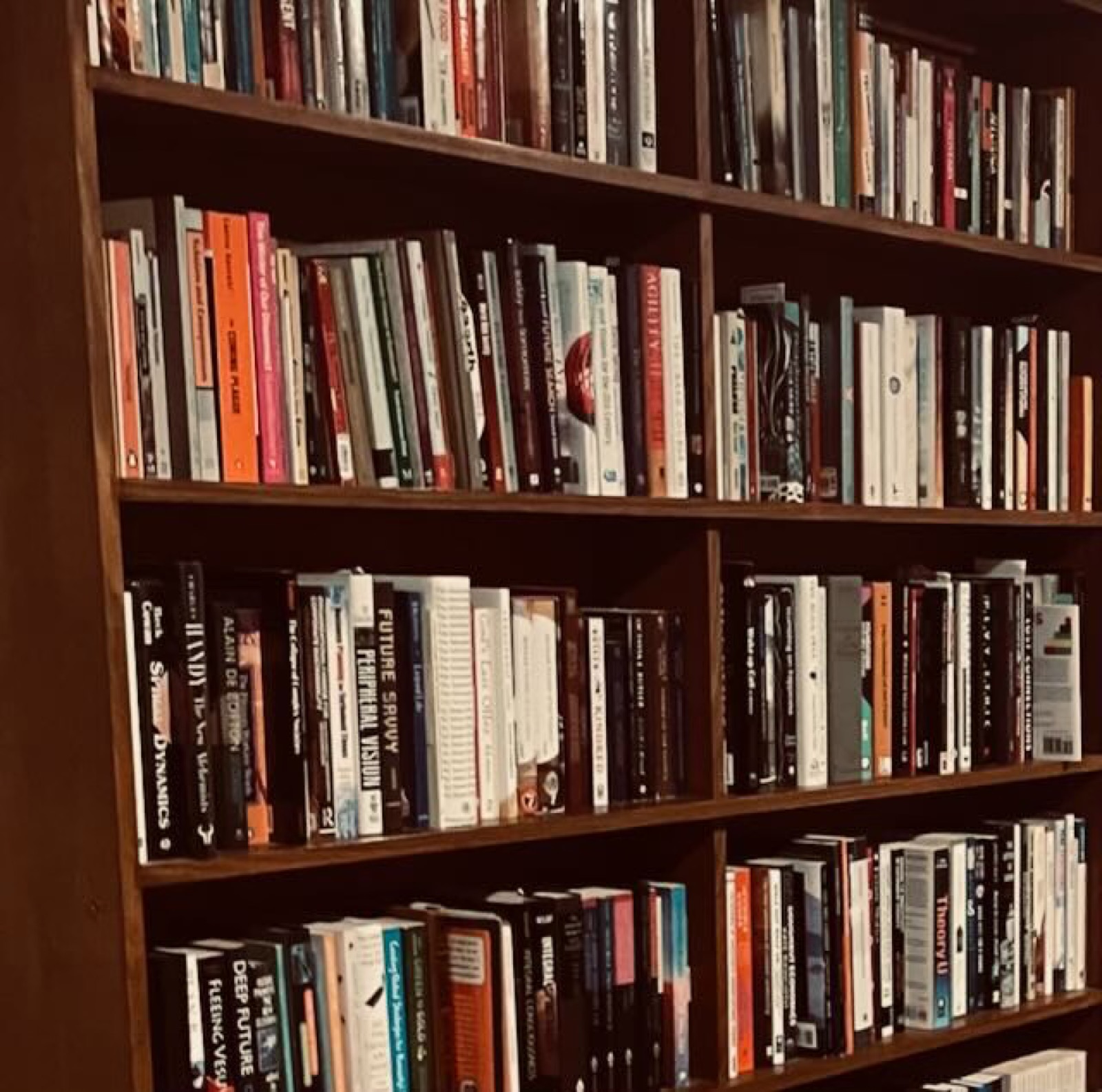
This is a living bookshelf, those authors whose work is the foundations of, and companions to, The Art of Unravelling.
These books don’t all agree with each other. Some I return to often, some I wrestle with, some sit quietly and grow in influence over time. They are here as threads in the wider weave: guides, provocations, and companions for those tending endings, grief, kinship, and emergence.
They are in no particular order, and I will add more as they come to me.
I have included Affiliate links included unless notified: I am experimenting to see if people choosing books this way also supports the continuation of this work.
For my Australian readers, I am still sourcing a shop that has most of these, in the meantime, please support your local bookseller if you can.
Grief, Mortality & Endings
Francis Weller – The Wild Edge of Sorrow (2015) — Grief as communal, sacred work.
Stephen Jenkinson – Die Wise (2015) — On dying well and hospicing culture.
Atul Gawande – Being Mortal (2014) — Why endings matter, and what they teach us.
R. G. & R. E. Menzies – Mortals (2021) — How fear of death shapes society.
Readings.com.au (non-affiliate link) | Amazon
Ernest Becker – The Denial of Death(1973) — A classic on how cultures avoid mortality.
These works helped open important conversations about trauma in the body. They alone are not sufficient for understanding collective, ecological, or systemic grief and they must be held alongside kinship, power, and place.
Bessel van der Kolk – The Body Keeps the Score (2014) — Trauma, grief, and the body.
Gabor Maté – The Myth of Normal (2022) — Trauma, illness, and healing in a toxic culture.
Kinship & More-Than-Human Relations
Robin Wall Kimmerer – Braiding Sweetgrass (2013) — Reciprocity and kinship with plants.
David Abram – The Spell of the Sensuous (1996) — Language, perception, and the more-than-human world.
Tyson Yunkaporta – Sand Talk(2019)
Tyson Yunkaporta Right Story, Wrong Story (2023) — Indigenous pattern thinking.
Donna Haraway – Staying with the Trouble (2016) — “Make kin, not babies.”
Collapse, Modernity & Systems
Vanessa Machado de Oliveira Andreotti – Hospicing Modernity (2021) — Decolonial hospice for dying systems.
Jared Diamond – Collapse (2005) — Why societies fail.
Joseph Tainter – The Collapse of Complex Societies (1988)
John Michael Greer – The Long Descent(2008) — Slow decline vs. sudden collapse.
Mark Fisher – Capitalist Realism (2009) — Why it’s easier to imagine the end of the world than the end of capitalism.
Thomas Homer-Dixon – The Upside of Down(2006) — Catastrophe as renewal.
Peter Turchin – War and Peace and War(2006) — Empires rise and fall.
Daniel Schmachtenberger –interviews on the metacrisis
There are many podcasts that Daniel has done – search for him via your favourite podcast platform
Emergence, Systems & Renewal
Joanna Macy & Chris Johnstone – Active Hope (2012)
Adrienne Maree Brown – Emergent Strategy(2017)
Nora Bateson – Small Arcs of Larger Circles(2016)
Gregory Bateson – Steps to an Ecology of Mind (1972)
Nora Bateson – Combining
Donella Meadows – Thinking in Systems(1999)
Donella Meadows –Leverage Points (1999) (Opens in new window)
C.S. Holling – on resilience & panarchy (2001) (Opens in new window)
Daniel Wahl – Designing Regenerative Cultures (2016)
Fritjof Capra & Pier Luigi Luisi – The Systems View of Life (2014)
Margaret Wheatley – Leadership and the New Science (2006)
Charles Eisenstein – The More Beautiful World Our Hearts Know Is Possible (2013)
Rebecca Solnit – A Paradise Built in Hell(2009)
David Whyte – Consolations (2015)
Michael Singer – The Untethered Soul(2007)
Sohail Inayatullah – Understanding Sarkar: The Indian Episteme, Macrohistory and Transformative Knowledge (2001)
Carol Sanford – The Responsible Business(2011)
Carol Sanford – The Regenerative Business (2017).
This shelf will keep evolving. Books will come and go, as the practice itself does. You don’t need to read them all.
Follow the threads that pull at you and see where they lead.
The Art of Unravelling is offered as a gift, sustained by those who feel called to support the weaving. If you’d like to help tend the fabric of this work, you can contribute via the link below.
Walk alongside this work
New posts arrive gently, in season. Subscribe on Substack to receive them, or visit The Seed Bank for printable practices.
Subscribe Visit The Seed Bank