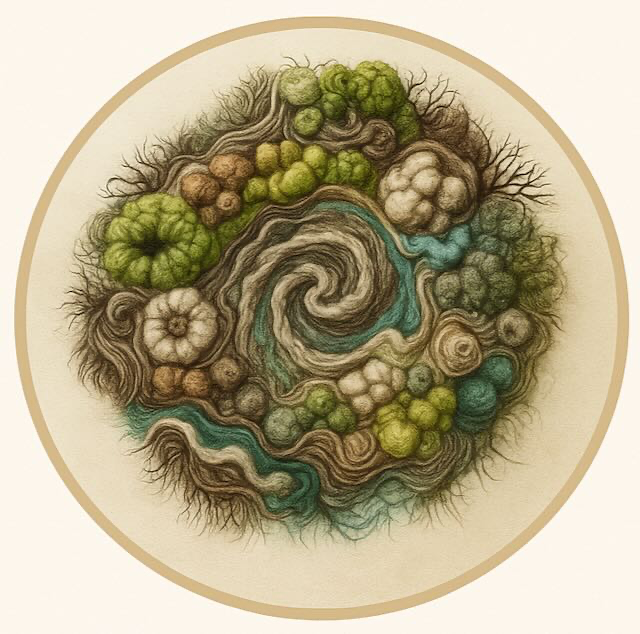
In a culture that equates motion with meaning, drifting is a radical act. To drift is to trust the tide over the to-do list, to become porous, to belong to uncertainty without demanding resolution.
Each of these kinship metaphors invites a different kind of fidelity. Not to fixed identity, but to presence, softness, and slow transformation.
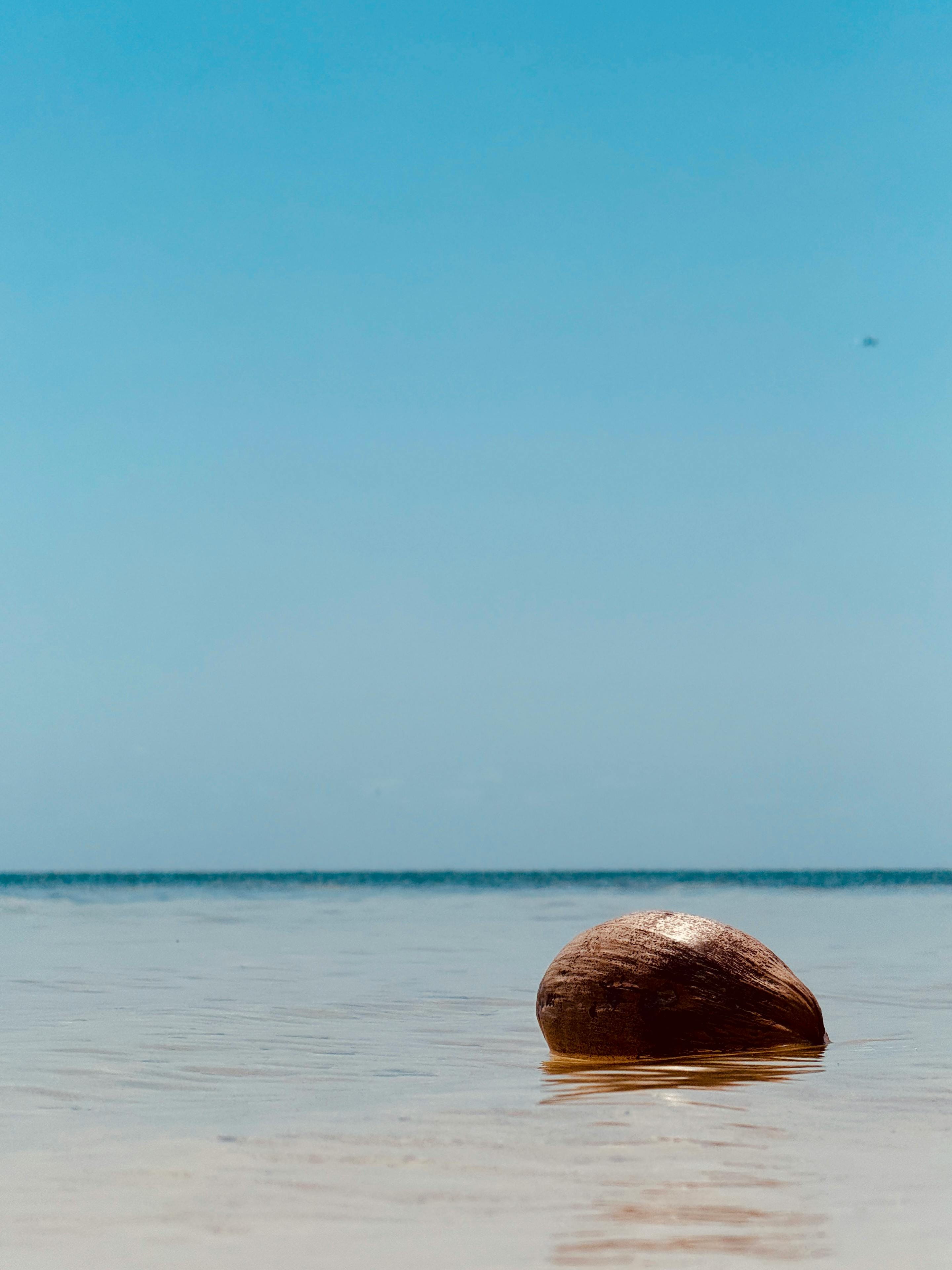
The coconut: drifting toward emergence
The one who carries sweetness across saltwater
You are carried by vastness. You may never return to where you began. The journey is slow, saturated, and directionless. But something is forming within you. Soft. Nourishing. Unplanned.
You may feel:
Untethered from purpose
Quietly hopeful, despite having no proof
Tender in places you expected to be tough
Questions that may emerge:
What am I carrying that no one sees yet?
What could grow in me if I stopped rushing?
What sweetness might only emerge after the drift?
Modernity’s critical voice:
“You’re wasting time. You should be rooted by now.”
“If you’re not producing, you’re not valuable.”
“Don’t drift: decide.”

The feather: drifting without weight
The one who no longer clings
You’ve let go: of identity, of urgency, of needing to matter. You drift lightly now, carried by air, not effort. It’s not passivity, it is actually surrender.
You may feel:
Free, but also invisible
Exposed without structure
A relief that borders on guilt
Questions that may emerge:
What if letting go is the beginning of clarity?
What have I mistaken for “strength” that was actually burden?
Can lightness be sacred?
Modernity’s critical voice:
“You’re being flaky.”
“You need to take control.”
“Floating is for the privileged.”

The river stone: drifting deeper
The one who does not float, but sinks
You are not moving forward. You are sinking but not in despair, in depth. You are letting the layers hold you. Letting silence change your shape.
You may feel:
Withdrawn, slow, heavy
Deeply introspective
Resistant to social speed or surface interaction
Questions that may emerge:
What if stillness is the only way to hear what matters?
What have I buried that wants to be witnessed?
Can I trust depth, even when no one sees it?
Modernity’s critical voice:
“You’re depressed.”
“You should be doing more.”
“Don’t go too deep: you’ll lose momentum.”

The jellyfish: drifting in sensory presence
Kin of relational attunement
You are pulsing with the world, not against it. You feel everything: tides, moods, undercurrents. You’re not navigating alone, you’re moving with.
You may feel:
Hyper-sensitive, yet deeply alive
Responsive instead of driven
Vulnerable, but in tune
Questions that may emerge:
What am I sensing that others are ignoring?
Can I let attunement guide me more than strategy?
How does my body know before my mind?
Modernity’s critical voice:
“You’re too emotional.”
“You need boundaries, not feelings.”
“Attunement won’t pay the bills.”

The hidden fifth: drifting as disappearance
The one who steps out of sight
You’ve stepped out of view. You’re not documenting. Not performing. Not branding your becoming. You are letting yourself be unseen and deeply real.
You may feel:
Forgotten or unvalidated
Relieved not to explain yourself
Restored by invisibility
Questions that may emerge:
What grows in me when I’m not being watched?
Who am I beneath recognition?
Can I trust what is forming in the dark?
Modernity’s critical voice:
“If no one sees it, it doesn’t matter.”
“You’re falling behind.”
“Visibility is power: don’t disappear.”
Closing Invitation
You don’t have to choose one. You may drift between them, some softening here, sinking there, feather-light one day and heavy the next, but let these metaphors remind you:
Drift is not failure - it is response, it is sensing and it is resistance to the lie that your worth is in your output.
Which kin are walking with you this week?
The Art of Unravelling is offered as a gift, sustained by those who feel called to support the weaving. If you’d like to help tend the fabric of this work, you can contribute via the link below.