There’s a moment in every shared journey where the map dissolves, not just for one person, but for all of us. A kind of collective fog rolls in. What once felt solid becomes porous, familiar dynamics soften and we find no one is steering or sure of what is next.
This is the moment we often panic…or try to fix…or revert to hierarchy, urgency, and direction.
We look for someone to lead, we look for something to agree on, we search for ground that feels firm even if it’s just an illusion, but what if this moment is the invitation?
To drift together is not to give up or to dissolve into passivity. It is to practice a deeper kind of trust, not in outcomes or shared certainty but in relationship and shared attention.
Social drifting asks us to:
Stay connected without clarity.
Notice subtle cues instead of chasing consensus.
Hold space for each other’s slowness, disorientation, even silence.
Resist the impulse to lead too soon or to demand direction from others.
This is not group dysfunction, this is threshold culture.
A way of being together that resists heroic control and passive bypass and makes room for the unseen to arrive, for the field to shift, for new coherence to emerge rather than be imposed.
Social drifting might feel like:
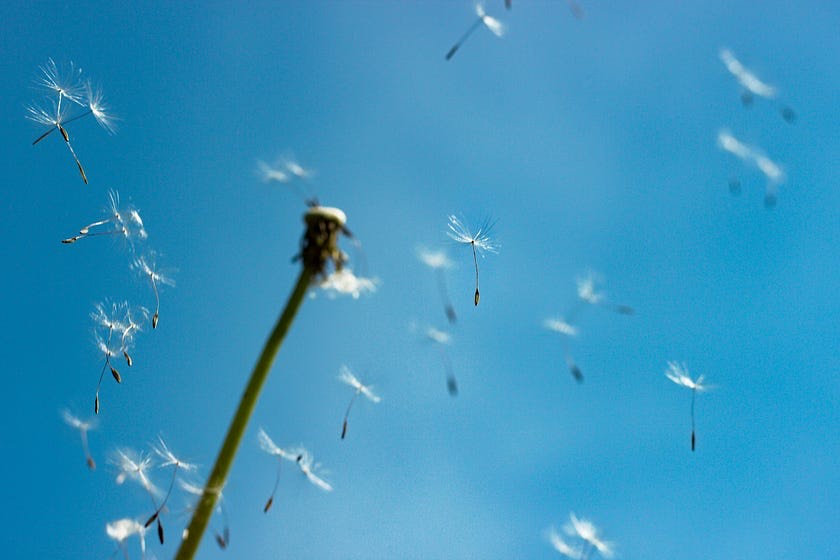
A flock with no lead bird, turning in mid-air
A raft with everyone listening to the river, not a single oar in command
A conversation where no one needs to be right, but everyone is attuned
A creative group with no brief, only the pull of something not-yet-said
A collective pause that lets something ancient speak
Or it might look like:
Someone starts a sentence they don’t know how to finish and someone else catches it.
A half-formed idea begins to unfold, not because it’s correct, but because it’s alive.
You find yourself building on something, not toward an outcome, but toward a feeling of deepening.
The group isn’t solving, but something is forming between you, sentence by sentence, breath by breath.
This is generative flow without a goal, or emergence as a collective act of trust.
This week, ask:
What relationships am I in that feel quietly unstructured, but real?
How do I respond when the group becomes uncertain?
What part of me wants to control and what part is willing to stay with not-knowing?
Can I stop reaching for a role (leader, follower, fixer) and simply be in rhythm?
What kind of kinship becomes possible when we don’t rush to define it?
We are not aiming for coherence, we are practicing attunement without control. We are learning how to stay in rhythm, even when the melody disappears and we don’t know who is humming.
This is not leadership; it’s relational listening and sensing together. This is not a meeting, it's a meadow of relational entities coming together. Drifting is not the absence of direction; it’s a different way of sensing where to go.
You don’t have to know, you just have to stay together.
The Art of Unravelling is offered as a gift, sustained by those who feel called to support the weaving. If you’d like to help tend the fabric of this work, you can contribute via the link below.