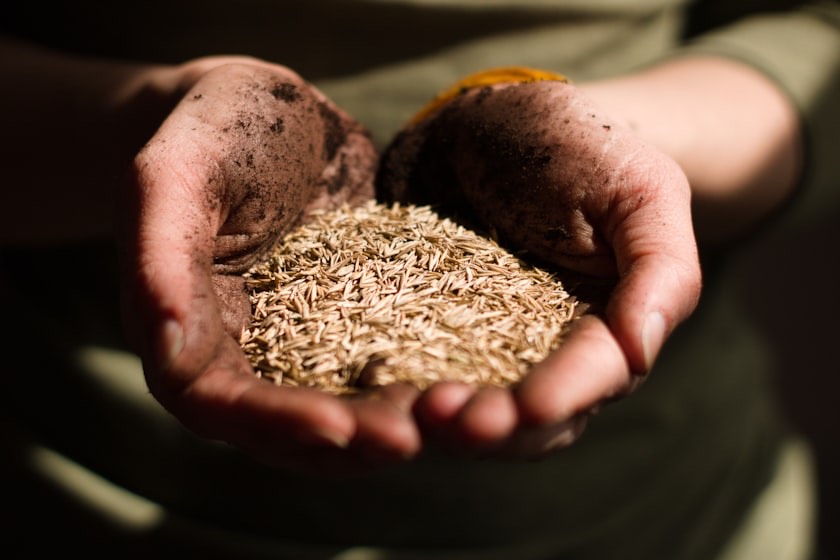
We carry seeds long before we know what they are. Some arrive as phrases, some as dreams. Some as curiosities, aches or longings that won’t leave. For a while, we tuck them away, keep them close, hold them tight but don’t look at them.
At some point, something shifts, the sack opens. Not to scatter or to plant, not yet. Just to look and to rummage, to see what we’ve been carrying and what it might connect to.
This is the week of the slow reveal
If last week we cracked open the shell by letting something unready be seen, then this week we begin to investigate. Not to define the offering but to explore: What is this thing I’m holding?
Sometimes we think we’re naming something brand new, only to find that it already exists. It may be adjacent, named differently, practiced elsewhere. Other times, we search for familiar containers, and none quite fit.
Either way, this is the week of curious misfits.
My seed: Deathwalker for modernity
When the phrase arrived, it felt clear in my body and utterly undefined in my mind. So I did what most of us do, I began looking for adjacent shapes.
What’s a Deathwalker, really?
What do death doulas do?
What’s in the field of death studies?
I searched for roles, metaphors, models. I read essays on modernity, critiques of capitalism, treatises on decline. I explored everything from systemic design to grief theory to spiritual ecology and some of it was close, but none of it was quite it.
Each field I stepped into helped me see the contours of my own seed more clearly, not because they were the thing, but because they weren’t. That contrast helped me name what I wasn’t doing. It also helped me begin to ask better questions.
It’s not just about reading
This isn’t a solo research project. Opening the seed sack also means starting to speak, not to pitch your idea or to sell your vision, but to listen with it in your palm. I began talking to people who knew things I didn’t.
Death workers. Systems thinkers. Futurists. Ritual holders. Institutional elders.
I asked small questions with big implications:
“Have you heard anything like this before?”
“What would it mean to walk with a dying system?”
“Do you think there are practices for witnessing decline that aren’t about saving or fixing?”
Not everyone responded, but many did, and each conversation helped me feel the edges of what this might be. I did not aim to define it, but to sense its weight, its resonance, its resistance.
This is where kinship starts
Not in shared conclusions, but in the mutual willingness to wonder. Opening the seed sack doesn’t mean flinging your ideas into the world.
It means:
Reading books that almost describe what you’re trying to say
Listening to podcasts from fields you’ve never explored
Reaching out to people you admire with questions, not answers
Testing what you’re holding in relationship, not for feedback, but for feeling
It’s slow and it’s honest, and it’s not linear. It builds the beginnings of a relational field, a web of context, companionship, and careful possibility.
Practice: A Rummage and a Reach
1. Pick a seed: Something you’ve been holding quietly, perhaps a phrase, a shape, a practice, a question.
2. Search the edges: Google some adjacent concepts. Browse the shelves. See who else might be working in a nearby space even if they use different language.
3. Reach out: Choose one person, maybe a writer, a practitioner, a thinker and send a small note. Not a pitch. Just a question, a wondering, a spark of kinship. “I’m following a thread I don’t quite understand, and your work touched something in it. Could I ask you a few questions?”
4. Listen: See what lands, what surprises you, what doesn’t quite fit and why.
5. Compost the findings: Let them settle. Let them add weight and texture to what you’re carrying. Don’t decide anything yet. Just… keep holding the seed.
Not all seeds are for planting (yet)
This is the week we rummage. We read, we ask and we fumble through strange corners of Substack. We email someone braver than we feel and we feel into what’s almost-right and almost-wrong. We name what we’re not doing, in order to better understand what we might be doing. This is the long, relational preparation that real offerings require.
Before the planting comes the sorting. Before the launch comes the learning. Before the clarity comes the conversation. So let the sack open and see what’s in there.
Seed Sack Inventory
Every season we carry seeds: ideas, roles, longings, and “shoulds.” Some are ready to scatter, some are not yet ripe, and some need to return to compost. The Seed Sack Inventory is a gentle reflection journal to help you notice and tend what you are carrying.
It offers prompts and practices for:
Listing the “seeds” of projects, ideas, or roles you hold.
Sorting what to carry, compost, or scatter.
Running a gentle “spark test” to see what still feels alive.
Listening for patterns, obligations, and old stories that no longer serve.
Letting one seed speak, through words, sketches, or whispers.
Naming what you want to back with time, tenderness, and energy.
This journal is designed to accompany the Season of Seeding, but it can be used anytime you feel full, uncertain, or in transition. It’s especially supportive at the start of a project, a season of life, or when you’re discerning what to carry forward and what to lay down.
This is not a worksheet to “finish.” It’s soil-work: a space to pause, rummage, and reflect on what wants to grow next.
The Art of Unravelling is offered as a gift, sustained by those who feel called to support the weaving. If you’d like to help tend the fabric of this work, you can contribute via the link below.