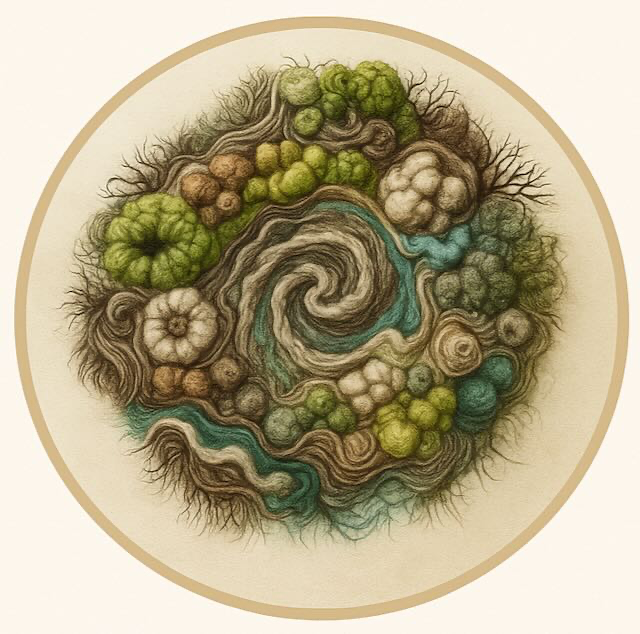
Welcome to the Season of Resonance
It’s been a while since we were here together. Life has moved, seasons have turned, and many of us have been living rather than reading. That feels right. The Art of Unravelling was never meant to be consumed on schedule, but returned to when the body is ready.
We arrive now at the Season of Resonance, not as a next task, but as a change in posture. After loosening, drifting, and seeding, this season asks a quieter, more intimate question:
How am I sounding into the world now?
Before we go any further, pause and notice yourself here. Not your thoughts about this season, but your body reading these words. How does it feel to arrive? Are you tight, curious, distracted, open?
Resonance begins exactly there.
The shape of this Season
This season unfolds through three works, each moving in four movements. Not as a ladder to climb, but as a widening field of attention.
Work 1: The Inner Instrument
We begin by turning inward. This work asks us to listen for our own tone, to notice when we drift out of tune, and to practice returning. Through tone, tuning, harmony, and resonance, we discover that the body is not a vehicle for the mind, but an instrument in its own right: capable of coherence, vibration, and fidelity.
Before resonance can enter the world, it must be cultivated within.
Work 2: The Resonant Field
From there, we move between us. The focus shifts from the individual to the relational space we create together. How do we broadcast presence rather than performance? What residues do our conversations leave behind? Who are our resonance kin?
Here, resonance becomes social, we develop a practice of co-regulation, dialogue, and tending fields that nourish rather than drain.
Work 3: The Resonant World
Finally, the circle widens again. This work invites us to notice how our structures whether cultural, ecological, or institutional, amplify or suppress certain tones. Resonance ripens into offering: fruit exposed to the sun, heavy with sweetness or ready to return to compost.
This is the work of systemic coherence which is creating ways of living and working that hum with life and of knowing when to rest in fullness and carry what we’ve learned back into the world.
This is not a season of more effort, but of cultivating coherence. The inner shifts of frequency begin to shape the outer world.
The question is no longer what shall I plant? but who in me is living this life?
Unravelling loosens.
Drifting suspends.
Seeding tests and begins.
Resonance aligns.
Together, they form a cycle and a practice of remembering, again and again, how to live as part of a world that is still becoming.
The Weave of the Seasons
First, we unravelled with threads loosening, grief rising, old garments of self falling away. Then we drifted feeling unmoored, trusting tides we could not name, learning to move without map or anchor. Then we seeded with our fingers in the soil, sorting husks from fruit, offering gestures small enough to live, letting the rest return to compost.
Now we enter resonance: where the roots we’ve made hum beneath our feet, where the inner note begins to sound in the outer world, and where coherence becomes its own quiet prayer.
This is The Art of Unravelling: to loosen, to drift, to begin, and to align. To know that each ending is also a beginning, a folding back into the weave.
Movement I: Tone
Resonance begins before action, in the subtle work of listening. When we hear a note, we’re not just hearing its pitch (how high or low it is) but its tone: the quality of the sound itself. The same pitch can feel warm or brittle, full or thin, depending on how it’s carried. Tone is what tells us whether something rings true, it’s the quality of the sound. We often describe it as warm, bright, full, or thin. The same note played on two instruments can sound utterly different depending on how it’s carried.
In a world that prizes metrics and visible outcomes, tone can sound slippery, even indulgent. But without tone, there is no music, there is only noise and so for us, without inner fidelity, action quickly becomes performance.
Tone is never isolated in music, a single note doesn’t just emerge from the instrument, it resonates with the space around it. Concert halls are designed with this in mind: their architecture and materials shape the way a tone is heard. A violin in a cathedral shimmers differently than in a rehearsal room. The first note tests the hall. It tells the musician: This is how my sound lives in this place.
The same is true for us, tone is not about how loudly we project ourselves into the world. It’s not volume and it is not quality. You can shout and still sound false, or whisper and still vibrate with clarity. What matters is whether your note rings true in your body and in the space you inhabit.
So this season begins here: listening for the raw vibration of your being. Not what you produce, not how others perceive you, but what hums in you before anything is shaped into melody.
The body as instrument
For centuries, Western culture told us thinking lives in the head. But science has caught up with what intuition always knew: the body is a thinking system.
The gut has its own nervous system, you have a “second brain” with over 100 million neurons. It doesn’t just digest food; it processes information and subtly shapes emotion, intuition, and the decisions we make, often before the mind has words.
The heart communicates with the brain through nerves, hormones, and electromagnetic fields. So “heart knowing” is not metaphor, it is a state of being.
Interoception is the ability to sense the body’s internal state, and it is a skill. People who develop it make more adaptive decisions, recover from stress faster, and sense alignment more clearly.
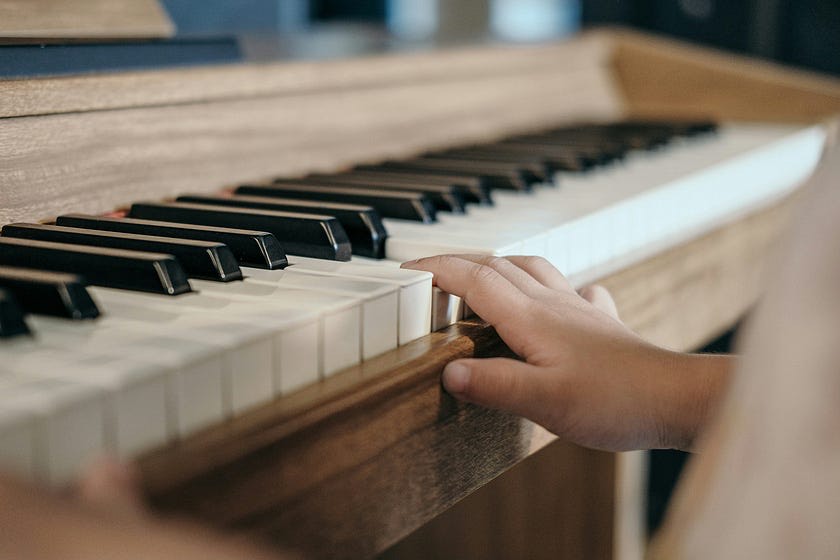
So we now know that your body is not cargo container for your brain, it is an instrument that is finely tuned, if you learn to listen.
Intuition as intelligence
When we talk about resonance, we are not talking about mysticism. We are talking about noticing what your body knows before your mind has words for it.
Think of a time you walked into a room and immediately sensed tension before anyone spoke, or when you knew you could trust someone before you had evidence. That was resonance, your nervous system registering coherence or dissonance.
Neuroscience tells us intuition isn’t irrational, it’s pre-rational: the body synthesising patterns too subtle or complex for linear thought.
Why Resonance matters
Most of us learned to act from external scripts: productivity, approval, efficiency. Without cultural scaffolding, we default to overthinking or fear. Resonance offers another way. It says: Test your actions against your whole system.
Does my body open or close?
Do I feel heavier or lighter?
Is there coherence between my head, my heart, and my gut?
It doesn’t replace reason, it complements it, it’s another compass.
The felt sense of Resonance
Sometimes resonance is subtle, for me it feels like a quiet yes, a soft hum of alignment. Other times it strikes me like a bell, a felt experience of the idea or thought hitting, and then a tingling that keeps ringing long after. My skin gets goosebumps and I usually shiver, there is a rush of energy through my body and I vocalise (yes! is my usual and quite non-creative go to but I can see how eureka would also work).
Whilst you may experience it differently, this is an example of what it feels like when you land on your own true note, a vibration that hums through body and spirit, reminding you: yes, this is the thing. This is me in coherence, this is what I’m being asked to live into.
That vibration is your compass. It is not abstract, it is a lived, embodied knowing.
Not the only way, but a way
If the word “resonance” feels abstract, translate it:
Gut instinct
Ecological fit
Inner alignment
Coherence
And if none of that lands? That’s fine. The point is not to adopt a concept, but to find a way to test into right action that isn’t just productivity metrics or social approval.
Tone is where we begin.
This week, there is no practice but listening and no doing but noticing.
Simply sit with the idea that your body is an instrument and that your first note matters, because without tone, there can be no resonance.
The Art of Unravelling is offered as a gift, sustained by those who feel called to support the weaving. If you’d like to help tend the fabric of this work, you can contribute via the link below.