There are trees in my life I’ve known for decades. I’ve seen them lose limbs in storms, grow new shoots, carry scars. They are not unchanged, but they are continually remade by wind, water, and season.
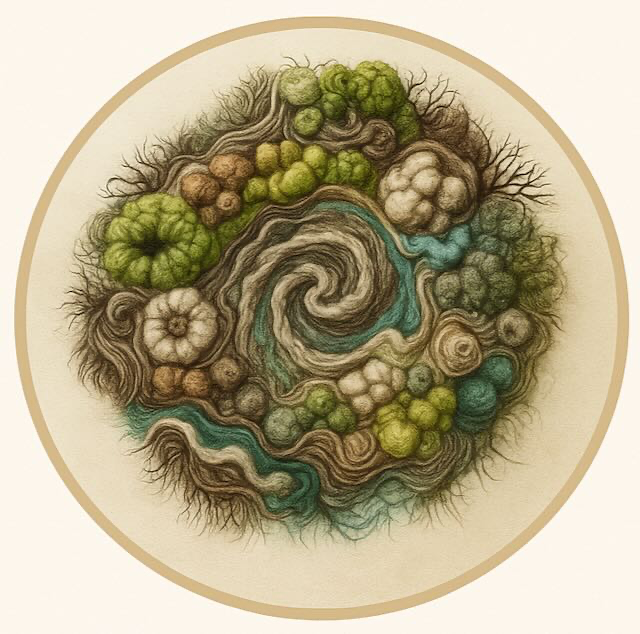
Then there are stromatolites: ancient living formations, still building themselves one layer at a time. They have endured not by speed or spectacle, but by persistence and fit with their place.
Neither the trees nor the stromatolites are eternal but both teach that life’s durability comes from regeneration, the ability to be remade again and again without losing the thread of who you are.
The shrine that is never “finished”
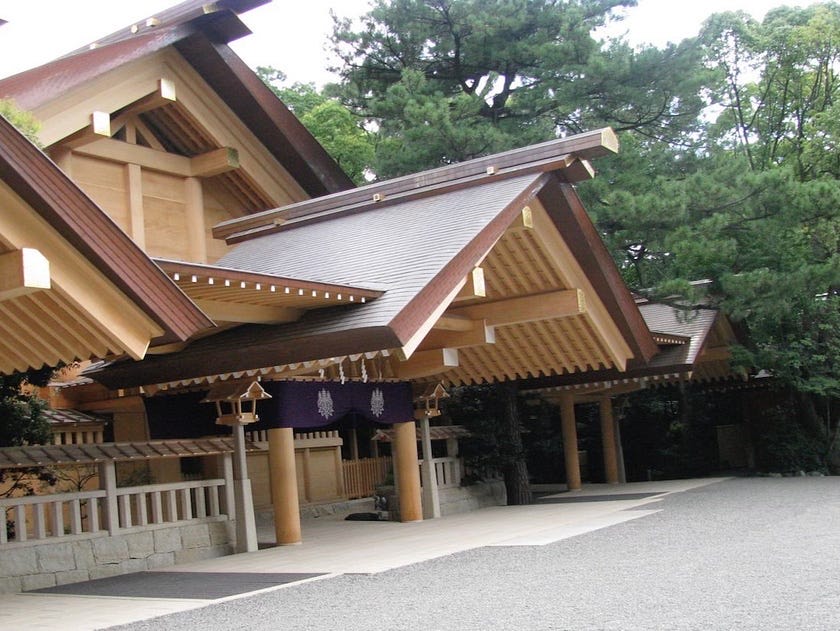
In Japan’s Shinto Shrines, sacred buildings are dismantled and rebuilt on a regular cycle. The cypress trees used for the next rebuild are planted decades in advance and tended over generations.
This practice isn’t about preserving a single structure forever. It’s about keeping the relationship alive: between people, place, skill, and story. The shrine is always old and always new. It’s an architecture of regeneration, not of permanence.
We have done this before
This is not new thinking. As a species, we have lived with long cycles and regenerative design for most of our history. Shinto shrine cycles show how to plan decades ahead, planting trees today for a building renewed by our grandchildren.
Indigenous fire-stick farming in Australia sustained biodiversity and reduced catastrophic fire for tens of thousands of years, guided by seasonal knowledge and relationship with country.
Polynesian voyaging traditions relied on deep apprenticeship in navigation, weather, and sea for a generational passing on of skills that ensured survival without exhausting the resource base.
Medieval commons in Europe managed shared land and grazing in ways that balanced use and renewal over centuries.
Multiple societies built places of worship using basic tools that took them generations to complete and are still standing a millennia later.
We know how to do this.
We simply chose, in recent centuries, to believe that faster, bigger, and newer is inherently better. The Enlightenment’s gifts of reason and measurement brought great advances but also fed the belief that progress is linear, resources are infinite, and anything old should be replaced. Now, that story is faltering.
Less, longer
In a culture that still prizes “more, faster,” there’s power in choosing “less, longer.” It’s a refusal to measure value only in scale or novelty. Less, longer means tending conditions for life rather than exhausting them for a single, impressive flourish. It’s designing for cycles of rest and renewal, rather than pushing for maximum output until the system breaks.
From trees: invest in roots, accept pruning, share resources underground.
From stromatolites: keep building in place, let each layer strengthen the next.
From the shrine practice: anticipate renewal, plant now for what you’ll need later.
A threshold moment
We are standing at a threshold. The speed–novelty–consumption model still dominates the surface, but its roots are rotting. They don’t know it yet, or they do, but can’t say it aloud. So, our work is double: tend our own seeds and ecosystems for their own sake and rehearse the regenerative practices that will need to be scaled socially and structurally when the current systems can no longer hold.
This is not “preparing for someday.” The shift is already underway; the drift is ending and the move to action is beginning. If we wait until the cracks are undeniable, it will be too late to plant what we will need.
Practice for the week
Find one relationship, place, or practice you’re part of, and make a move toward its long-term health. Not to lock it in forever, but to ensure it can be renewed when the time comes.
You might:
Repair something rather than replace it.
Share skills or knowledge so others can tend what you’ve been holding.
Adjust a rhythm to allow for more rest or replenishment.
Ask:
What am I building that could be renewed rather than preserved?
Where can I slow down to deepen relationships instead of speeding up to impress?
How can I plant now for what will be needed later?
Kinship in the long arc isn’t about making something that lasts forever. It’s about keeping something alive long enough to matter and making sure it can live beyond you if it needs to. It’s about showing that humans can again live by rhythms of regeneration, not extraction. We’ve done it before and if we start now, we will not be starting from zero when the old ways finally fall apart.
The Art of Unravelling is offered as a gift, sustained by those who feel called to support the weaving. If you’d like to help tend the fabric of this work, you can contribute via the link below.