Resonance isn’t something you “achieve.” It’s what happens when tone, tuning, and harmony begin to carry into how you live. It’s the difference between sounding a note and inhabiting a song. Often resonance doesn’t look dramatic from the outside, sometimes it’s as simple as this: your new tone is steady enough that your life begins to hold it.
The Physics of Resonance
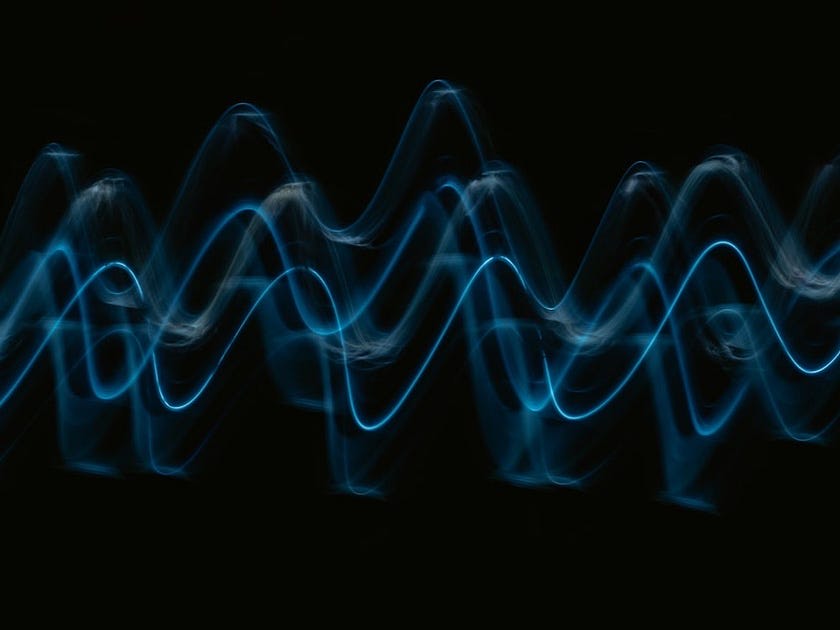
In physics, resonance occurs when a system vibrates in sympathy with a frequency. Strike a tuning fork near a piano, and the matching string will begin to hum on its own.
Spaces do this too. Concert halls are designed not only for volume but for resonance as the shape of the room, the material of the walls, the presence of people all shift the way a note lives in the space. A single violin can feel thin in one room and luminous in another.
This is the difference between volume and resonance. Loudness can fill space, but resonance transforms it. A true note doesn’t just exist in you; it sets the environment humming.
Why this matters
Think of the first time a poem pierced you, or a piece of music stopped you in your tracks. Maybe you didn’t understand the words, or you couldn’t explain why the melody mattered, but your body knew. Your chest tightened, your breath caught, your skin tingled. That is resonance: a vibration that moves through you, aligning something inside with something outside. It doesn’t argue or prove; it lands. Emotional resonance is often our clearest reminder that truth or insight isn’t just an idea, it’s a felt experience.
Our dominant systems: economic, political, cultural are de-harmonised from the planet. They prize extraction over rhythm, growth over coherence, noise over tone. They have pulled us out of resonance with the biosphere and, in turn, with ourselves.
In Yunkaporta’s Sand Talk, he tells of the emu in Aboriginal culture as a cautionary figure. The emu runs fast and strong, but with its head thrust forward, eyes fixed only on what is directly ahead. It cannot look sideways, cannot see the broader field. For Yunkaporta, this becomes a teaching about narcissism, about what happens when ego rushes ahead without regard for coherence, kinship, or culture. A society that prizes speed, dominance, and self-image over relation moves like the emu: powerful, but blind, destined to collide with what it refuses to notice. Resonance asks for the opposite posture, not ego charging forward, but listening sideways, attuning to the field, moving in step with culture and Country.
That’s why this work matters. Personal resonance is not a private indulgence; it’s training. It’s how we remember what it feels like to be in tune, so that we can begin to retune our ways of living and working together.
If we cannot sense resonance in our own bodies, how can we recognise when a system is life-aligned or life-distorting? If we cannot distinguish coherence from dissonance in ourselves, how will we know when a culture is vibrating false? Learning to live as resonance is how we begin to re-enter fidelity with the earth itself.
Resonance is not only individual, sometimes the bell that rings in you is struck by something larger: a collective field, a truth that belongs to more than just you. This might happen when you are alone or with a group that has stumbled onto a truth that has emerged.
The experience is the same: a vibration that keeps humming through you long after the moment. It often carries another dimension: the sense that you’ve aligned with something bigger, something that wants to move through the world. Your body becomes the instrument, the field becomes the striker, and together they ring out a note that says: yes, this is the work, this is the way.
Offering without proof
For me, one lived example has been this Substack. Not because I knew it would “work,” but because when I listened for coherence, this was the form that hummed back.
Partnering with AI to write, instead of forcing struggle, was a form of tuning.
Editing, formatting, and choosing images became small acts of curation.
Publishing into silence was a lesson in fidelity: the work is valid whether it’s applauded or not.
Receiving feedback became amplification, not proof.
Above all, the work became about offering because resonance asked it, not because performance demanded it.
This isn’t a template, it’s one example of resonance becoming action.
Yours will look different.
Living as Resonance
Resonance is not a one-off act; it’s a posture. It’s a way of curating life so your tone stays clear:
Who and what help me stay in resonance?
Where am I pulled into performance, and where am I living in coherence?
What is one offering I can make that is true to my tone?
Living as resonance means your very presence becomes an offering, a reminder that harmony with self and planet is possible.
The old systems are out of tune, but resonance is how life itself works: forests, rivers, bird flocks, and human choirs all know it.
This week, your invitation is to notice where your life already hums with resonance and to offer one note into the field. Not for applause, not for proof, but because the world is aching for songs that retune us to one another and to the earth.
The Art of Unravelling is offered as a gift, sustained by those who feel called to support the weaving. If you’d like to help tend the fabric of this work, you can contribute via the link below.